

What if the most disorienting passages of your life were not breakdowns, but breakthroughs waiting to be witnessed?
In this podcast episode, I sit down with Renn Butler, author of Archetypal and Holotropic Astrology, for a profound conversation about the death-rebirth process, the perinatal matrices of Stanislav Grof, and how astrology serves as a Rosetta Stone for the psyche. We explore how the four outer planets—Saturn, Uranus, Neptune, and Pluto—map directly onto the stages of birth, and why understanding this can transform how you navigate spiritual emergencies, crisis, and renewal.
Renn shares his remarkable journey from fundamentalism to the Esalen Institute, his work alongside Richard Tarnas and Stanislav Grof, and how archetypal astrology can help us prepare for, time, and integrate psychedelic-assisted therapy and breathwork sessions. This is a conversation about cooperating with the self-healing intelligence within you, releasing blocked patterns from past trauma, and reconnecting with the eternal.
If this conversation resonates, subscribe for more episodes that honor the depth of the soul's journey through the zodiac.
RENN BUTLER
Website: https://www.rennbutler.com/(opens in new tab)
Online Course (2026–2027): https://www.rennbutler.com/online-courses(opens in new tab)
Books: https://www.rennbutler.com/books(opens in new tab)
✶ WELCOME TO NIGHTLIGHT ASTROLOGY! ✶
Below you'll find all the ways to go deeper — from free resources to full courses, readings, and community.
───  STAY CONNECTED ───
 Subscribe to the Newsletter → https://nla.to/NEWSLETTER
 Free Daily Meditation Group → https://nla.to/DailyMeditation
───  LEARN ASTROLOGY ───
 Nightlight Astrology School – 4‑Year Curriculum
Courses, Master Classes, Membership & Retreat
 Monthly Live Talks
 Shop All Events & Master Classes
 Speaker Series
→ https://nla.to/FREE_LECTURES
───  COURSE RESOURCES ───
Years One & Two → https://nla.to/0lvm
Year Three → https://nla.to/vtp3
Horary Resources → https://nla.to/lp5r
Master Class Resources → https://nla.to/pz3y
Astrology Software Resources → https://nla.to/wmez
Other Resources → https://nla.to/edbu
───  COMMUNITY & GUIDANCE ───
 Guild Membership – for dedicated practitioners
 Astrology Retreat – "The Oracle Within"
Book a Need‑Based Astrology Reading
ABOUT THE NIGHTLIGHT ASTROLOGY PODCAST
Ancient wisdom for daily life. For over 12 years, Nightlight Astrology has offered a grounded, daily conversation about astrology as a spiritual path and a psychological tool. New episodes every morning, seven days a week—no hype, just steady guidance through the seasons of the soul.
Hosted by professional Hellenistic astrologer and teacher Adam Elenbaas, this channel explores traditional techniques — planets, signs, houses, aspects, and planetary dignity — while weaving in archetypal psychology, karma, fate and free will, and the animistic cosmos. Topics range from daily transits and chart breakdowns to myth, meditation, and the practical art of reading for yourself and others.
Whether you're a beginner or a seasoned practitioner, you'll find something to sit with each day.
 SUBSCRIBE: https://www.youtube.com/@Adam-Elenbaas
————
Subscribe 
 to Nightlight Astrology Podcast on Apple
https://apple.co/4gI5UQz
ABOUT ADAM ELENBAAS
Professional Hellenistic astrologer, founder of Nightlight Astrology, author of Fishers of Men, 16+ years full‑time practice, 13,000+ client readings, 5,000 students trained.
Watch or listen on your favorite platform:
Transcript
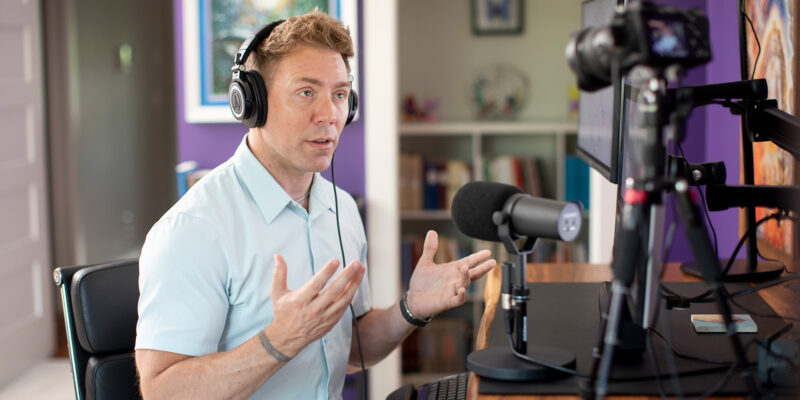
Hey everyone. This is Adam Elenbaas from Nightlight Astrology [https://nightlightastrology.com/].
Today, I am very excited to bring you an interview with one of my colleagues, someone I consider a spiritual friend and brother, and another astrologer whose work I love and who you have heard me talk about a lot on the channel. This is Renn Butler.
I've spoken many times about his book on the channel, The Archetypal Universe, which is easily one of my favorite astrological reference books. If you are an archetypal astrologer, that book is, in my opinion, one of your must-haves.
Like it's a book you need to have on your shelf. I'm going to talk about that a little bit today. But Renn and I had a chance to sit down recently at the United Astrology Conference in Chicago, get to know each other a little bit more, and talk about his book.
Which is called Archetypal and Holotropic Astrology: Universal Patterns and Deep Self Exploration. I think this book is remarkable, and so I'm very excited to tell you more about it today, and also just turn you on to all of the interesting things that Renn is doing as an astrologer.
Which to me, there's a lot of personal overlap with because of my background and how I came to astrology. So I'll tell you a little bit more about that today as well. But yeah, I think you'll really enjoy this. Hope you will appreciate this kind of special bonus episode.
So, without further ado, I'm going to welcome my friend Renn onto the show. Hey, Renn! Hello. It's an honor to be here. Yeah, yeah. It's good to see you. For people who watch my channel often, I'm going to put something up on the screen just briefly.
So, if you've watched my show over the past years, then you know that I have talked about Renn's book, The Archetypal Universe many, many times. I've read out of it texts or portions of texts many times, included elements of the pages of his book in many of my talks.
It is probably my favorite reference book that I have as a daily astrologer cooking up mundane delineations from daily transits. So if you know the channel, you know that I've referenced a man 10. But I've never had Renn on the show.
By the way, before we get any further, if you want to check out the book right away or any of Renn's work, it's rennbutler.com. We'll come back to that later. But yeah, so that's the background, Renn, and we finally met in person for the first time at UAC.
And got to talking about your new book here, which was yeah, it was really nice to finally meet. Yeah, it was magical. It was great to connect and see you with the large group of your students and such a warm community you've created.
And the whole weekend was just a magical experience. Being in Chicago was amazing. Being back in the states was very special. I live in Victoria. Yeah, yeah. Well, I think it. One of the things that it did was it just got us to a few opportunities to sit down and chat a bit more.
And the connection was pretty instant. I'm not surprised. Your background with astrology comes through—I would summarize it as a transpersonal lens and also archetypal—and your background also comes from deep ceremonial and transformational experiences with consciousness.
I want to talk about that, but for people who are newer to the channel, we've had a lot of new subscribers recently. My inroad to astrology really came through working with ayahuasca in South America in 2000, starting around 2004 and five.
My path with psychedelics as really a route to healing addiction in my life in my early 20s, and for about 10 years, it played a role in my life that really set me on a spiritual path and opened the door to astrology for me.
Astrology as an archetypal language of the psyche became sort of like so obvious to me through these psychedelic experiences, which were ritualistic, therapeutic, and so forth. Your inroad is a little bit similar, and that's where I think that your book, this new book that you've written, I'm going to hold it up again and show it to everyone.
I'm going to here. Let me just do this really quick here. Okay, so you can see archetypal and holotropic astrology, universal patterns, and deep self exploration. So if you don't know, you know Renn's book on the archetypal universe, you just know it's an amazing astrological reference book.
But you may not know that his background comes from similar transpersonal psychological experiences of healing, crisis, and renewal or transformation. I think what'll help because a lot of people aren't going to be familiar with your background is like you.
So you've been involved, Renn, with archetypal astrology, psychedelic, holotropic self-exploration for more than 40 years, and you were actually at Esalen, which and maybe you could tell us what Esalen is for those people who don't know, during a really important period in the development of this line of work.
Psychedelic holotropic astrology, if we call it that, which is what your book is all about. Before we get into the ideas of the book, though, maybe I thought you could just tell us about how you entered this world, a bit about what this world is, and yeah.
Your relationship with people like Richard Tarnas, Stanislav Grof, and how you came in contact with them and this sort of movement within the modern history of astrology. Yeah, my father had gone to Esalen in 1968 and did a month-long Esalen Institute is one of the oldest human potential workshop centers in the Western world.
In 1962, it was formed same year as Findhorn in Scotland, and so I had some roots there. My mom, after they got divorced in '73, went down and lived there for a year, worked in the office. So after my first year of university, was suffering quite a bit.
I had transiting Pluto square, my Moon Saturn conjunction. You know that Pluto Saturn is is no walk in the park, really cracked me open, and I went there and I got to be a work scholar, then a work scholar too. Rich Tarnas kind of took me under his wing, and we had many fascinating conversations.
I can still hear exact words of some of our conversations where we were, he convinced me that it would be a good idea to do a month long with Stan and Christina Grof in the fall of 1980. So I got to be in a month long with them.
Got I met Fritjof Capra and Angelique Arian and Jungian Cecil Burney, and did did holotropic breathwork, which wasn't named that at the time. They now have renamed it as grof breathwork. There's another training also teaches this work called, and they call it holotropic breathwork.
And began my own research. So I was really lucky. I I was raised Mormon, you know. Like our backgrounds have some similarities, Adam, quite amazing. So I was raised in a fundamentalist religion, and the civil rights movement really pushed my parents out of the church, and you know the Vietnam War, which they didn't support, and feminism.
And so and then they started a back to the land commune in 1980, or not sorry, or rather 1970. So we went from LDS to LSD. That's great. And so I've had pretty wide extremes in my life. I have a Saturn Uranus quincunx, which I really relate to this, and you know, it's given me and my brothers and sister kind of a wide cultural provenance for looking at life in humorous ways, and that's one of the signatures of our family.
Yeah, nice. Maybe what you could do is just for for people who aren't familiar with Stan Grof's work, could you just walk us through a little bit of the the sort of cartography of the the psyche that that he is so well known for having established?
That the I mean, I'm thinking right now of the the sort of biographical, the perinatal, the transpersonal dimensions. It is such a fascinating map, and it represents such an interesting departure from conventional psychology, at least as I've understood it. So maybe you could just tell us a little bit about his work and what makes his kind of mapping interesting or unique.
Yeah, he was able to to go deeper and see more because psychedelics are are much more powerful activating technique than dream work, or or and much more than free association, which were the two of the major routes at the time. So in his career, he sat for 4000 high dose psychedelic sessions, individual sessions, one client.
Most of those were high-dose LSD sessions, and he came to feel that psychedelics, when used responsibly, have the same role in psychiatry and psychology as the microscope in biology and the telescope in astronomy. And 4000 sessions—that's a lot of clinical data. He worked with people in all kinds of different symptom categories and diagnoses, including four psychotic individuals, and was able to see dramatic healing.
One of the things that he discovered, Adam, was that there's a finite amount of negative material in the individual layers of the psyche, at the biographical and the perinatal layers. There's a finite amount of it, and and clearing that out opens or widens the pathway to divine consciousness, which the astrological symbol for that is is Neptune, and unitive mystical states are really the goal.
Of transpersonal psychotherapy and also mysticism to reach those unitive states that go that transcend the boundaries of our body and the finiteness in in the temporariness rather of of our human lifespan the fact that we're going to die so so he he he saw a lot of trauma from infancy to the present, which is the biographical layer of the psyche.
People work through severe toilet training, sibling rivalry, physical and sexual abuse, severe accidents, illnesses, and operations, things like that. His clients started having experiences that fell outside of the the narrow, sort of reductionist materialist Freudian model that he and his colleagues were working in.
And they they started to have dramatic, powerful abreaction of energies and emotions, like volcanic levels of releasing, And complex twisting movements that resembled the fetus positions during labor, and they also attested to him that they felt they were living their births and facing death and mortality.
So he calls this the perinatal layer, so birth and death, and then and then, even deeper experiences began to emerge, and he called he coined the term transpersonal. One he was one of the founders of transpersonal psychology, so these could be embryonic experiences, ancestral, racial, collective memories, past life experiences, phylogenetic memories.
People can identify with the consciousness of other people, groups of people, all of life, all of creation, or they can transcend the time-space continuum as we know it altogether. Experiences of archetypes, mythological sequences, archetypal terrains, hells, paradises, heavens, and so on, and then and then unitive experiences that transcend all forms: the universal mind, absolute consciousness, the macrocosmic void.
So, those are the most important categories. Yeah. Yeah. You know, and I think one of the most remarkable stories in your book, when you're recapturing this history for people, which I think is really important, just that you put down a lot of the history of all of this for people.
But in the in your book, you you talk about Grof having this extraordinary map, right of of consciousness, but at a at a phase where he couldn't reliably predict what material would emerge in a particular session of the LSD types of sessions you're talking about here.
But then astrology came into the picture and became like a yeah a missing link or something, and I believe it was around this time that Tarnas and Grof also their their work started coming together. Could you just capture that part of the development a little bit for us?
Right, Grof and his colleagues could not predict the content of sessions, and it became quite important to issue because they wanted to be able to prepare people and have extra support for certain phases of the journey. You know, they used the MMPI categories, DSM three categories, Rorschach test, and others.
And an astrologer came to Esalen, an artist astrologer and taught them how to cast charts and look at transits, and so they began to to do research. and Esalen was a perfect laboratory because so many people were having powerful opening experiences there, coming and kind of cracking open, and they were coming to Rick and talking about their experiences, and he was looking at their transits like constantly.
And Stan eventually said that archetypal astrology functions something like a Rosetta Stone of the psyche, and you can't predict the exact specific concrete outcomes in everyday life with astrology usually, but but as Rick says, it's it's archetypally predictive, not concretely predictive.
And when it comes to looking at our inner life, it can be even more predictive. So we're looking at the broad thematic experiences, the types of emotions that are likely to come up, different types of, let's say, aggression, nuances of aggression, aggressive feelings, different types of sorrow, different types of esthetic visions, different nuances of mental opening or or constriction, and and hundreds and hundreds more.
Yeah, I think. One of the most striking ideas that comes around this time is that there's this correlation that gets made between when you were talking about the perinatal component of Grof's mapping, that there are these four. There's a mapping between the four outer planets, starting with Saturn and going through Uranus, Neptune, and Pluto.
That mapping is—I mean, I've heard you teach it before, you know—and you do a really nice job. But maybe just briefly tell us how elements of that perinatal matrix started getting mapped with the planets, yeah. Well, thanks for these great questions. So the perinatal layer is sort of the middle range of the psyche.
It's the doorway between the personal psyche and the transpersonal unconscious, which includes divine consciousness, and and so the perinatal is is very important. And what Stan observed in his sessions was that people experience the perinatal layer in four broad clusters of experience.
He called the basic perinatal matrices or BPMs, and the first one is based on the union with the mother in late gestation, and ideally, this would be a situation of unity, of bliss, ecstasy, feelings of seamless connection, safety, higher meaning. But there can also be toxic womb experiences if the mom was sick, or using drugs, or alcohol, or you know, really stressed, not supported.
And these unitive experiences, Rick later was able to see fit exactly the the nuances associated with the astrological Neptune. So the positive sense of mystical oneness and search for higher meaning, religious feelings, and also the distortions of confusion and projection, you know, wishful thinking.
It seems now that these negative sides of Neptune are not really intrinsic to the Neptune archetype, but might be more related to unresolved toxic womb leftovers, and we can clear those out and reach the pure, pristine oceanic or melted ecstasy of of Neptune and the first perinatal matrix.
Then the early stage of labor with the cervix still closed is experienced as a kind of no exit entrapment encagement. People can have feelings of inhibited type of depression, classic depression, no interest in anything, complete negative feelings about themselves, about life, about the universe.
And Rick was able to see that this is a pure expression of the archetype Saturn, the negative side of Saturn. There are many positive sides too, but when we have a strong Saturn transit, we can be under the influence of unresolved memories from that no exit stage of labor.
So that that can help us as astrologers to help our clients and you know give a kind of a reason why our whole universe feels dark now and oppressive is because we're reliving a situation where, for the fetus, its whole universe was inside the mother's body.
Then the the dynamic stage of labor with the cervix open involves enormous pressures and activation of energies, 50 to 100 pounds of force pressing the frail head of the fetus through the narrow pelvic opening, which is Mother Nature's way of, you know, completing the process. Activation of aggression, powerful volcanic discharges of aggression can happen in Psychotherapy and breathwork and so on.
There can be sadomasochistic feelings, which are related to the suffocation in the birth canal. Every contraction diminishes the flow of oxygen through the blood in the umbilical cord, and that's experienced as choking. That creates a kind of sexual arousal, which is that mixed with the aggression and other elements.
It becomes a very logical and plausible clinical basis for for the you know mixtures of of sexuality and aggression and power that we see in in our society in such negative ways. There can be confrontation with demonic archetypes or wrathful deities in this dynamic stage of labor, nausea and projectile vomiting, and images of you know vast cesspools and things.
Sounds like Pluto. Yeah, and then pyro catharsis, purification by fire, and all of those elements in the context of a of a death rebirth struggle and urges to overcome, and a sense of light at the end of the tunnel. It's easier than Saturnian depression because we have a feeling that we can do something to make the situation better have have long bases in connection with Pluto, as you as you said.
So during Pluto transits, we can encourage people to try to find outlets for these energies, like grof breathwork, holotropic breathwork, psychedelic assisted psychotherapy, with a reputable therapist, and so on. So, and then finally, the completed birth, the build-up of tension, then explosive liberation and decompression of space, and coming into the delivery room is is experienced as rebirth by the fetus and reconnection with the divine, with the great mother goddess, or with God, escaping from the threat of death.
Because the birth canal, you know, babies do die. I mean, mothers too. Babies are brain damaged. I worked for 25 years in group homes with most of the beautiful human beings I worked with had brain damage in birth labor, and so to to get out of that is a tremendous liberation. Excuse me.
People can have feelings of redemption, atonement, enlightenment in those Situations, forgiveness, and and the and these kind of sudden breakthrough experiences and openings and connections with the divine are associated with Uranus in astrology. So we have a very positive view of both Neptune and Uranus. The other ones are mixed, you know, but but Uranus is trying to emancipate us and help us to complete stages in our psycho spiritual development.
So we want to cooperate with that process when we can. It it it leads me to a question which I think a thoughtful reader might ask, and I think is a really beautiful part of your book, which is why would the birth process have such significance, both psychologically and archetypally?
What I mean, what convinced Grof, and also what's what has convinced you that birth isn't just something that happens to the body, but that it has such a profound impact or imprint, you might say, on consciousness. Right. Well, we know that animals that are much more primitive than the human fetus register memory, so that is no longer a legitimate argument.
There's a lot of talk in psychoanalysis about nuances of breastfeeding, and like as if the the newborn is a kind of a connoisseur who can you know register little subtle variations, but the hours of life threatening suffocation that immediately preceded are considered to be not even registered.
It's it's very difficult to accept the the this clinical research until we've either experienced it personally or at least witnessed it in others. The amount of energies and emotions and the intensity of them are really hard to to accept until we've experienced it. It is a natural process.
It's it's the divine feminine taking us through all the possible types of experience in an incarnation, but with a happy ending. You know that's that's the thing about it is is the divine takes us through the underworld and purgatory and then out into rebirth.
The problem with the patriarchal religions is they didn't believe in an experiential approach. In fact, they're really based on trying to suppress the feminine. They don't. They want to get away from the birth process. That is essential, the great biggest motivation, and also the in in in many mythologies, including the Greek, the highest force in in the physical universe was feminine, even for the patriarchal Greeks.
The three fates, right? The the the Furies had the final say on lifespan and so on. So the The male ego is afraid of that, and it's trying to build these bulwarks against it and sort of compensate. Right, it's a compensation and character armored against this deep fear.
When we now are we're re-integrating the experiential processes that we lost, that were. More intimately connected with the the feminine and mother goddess, then we can heal our birth trauma. Then our view of the feminine is miraculously improved, and women's feelings about themselves, you know, and and and then we realize that the negative experiences were just a subset of a beautiful natural process that that leads to an incarnation.
What an amazing opportunity to the divine gets to have an experience in in in the flesh. You know, the divine is flesh, and and so then our view of the feminine is greatly healed and it's shown for what it truly is. You know, so those are some of the ways.
Yeah, I love that. I I think I just remember growing up, you know, in the Christian church and hearing so much about, you know, that you hear the Garden story, the Eden story, a million times, and you know, as I've I've reconsidered it so many times through psychedelic experience, and have often thought about the birthing, the death and rebirth process of some of my most intense and scary, but also very healing, like ayahuasca journeys, for example, in South America, and many times thought to myself, "This is describing that that story is is describing a birth and rebirth process for humanity, and it's it's it's been read so literally, right?
And I think a lot of mythologies capture that archetypal sense of of birth and transformation and process for the collective, not not just for individuals too, but for the collective. Exactly. Yeah. Sort of on an individual level of losing the womb, cast out of the womb, and into the world of duality.
Right. The knowledge of the tree of the knowledge of good and evil, that that that's a symbol for. So we, but we have to lose the womb in order to be born into the samsara, the the physical universe. But it's not a mistake.
So the feminine is the agent of that process in the Genesis story, right? But it's not a mistake. It's only because the patriarchs have so much birth trauma that they they just feel it was such a terrible thing to lose the connection with the divine, and and they desperately want to leave the world, and it's all about going to heaven after after.
That's yeah. So we can we can actually reach the the state of heaven and parabase before we die, and that's strongly connected with reconnecting with the womb, good womb memories, and also with the rebirth experiences. So yeah, I I deeply appreciate that.
Even you know I think you know when I was growing up, my my father was a Methodist minister, as you know, and he he emphasized frequently emphasized this teaching from Jesus about you know the the the kingdom of heaven being spread before human beings and not having the right consciousness to enter it, and I I think about that frequently and that that shows up in the yogic traditions that have meant a lot to me as well.
So even these traditions that have this strong patriarchal background, the yogic tradition certainly has elements of that too. The Vedic philosophical and religious traditions of India, but there's a a clear way in which jiva muk, you know, like a jiva mukta exists, a liberated being who's here, and it's it's not set apart for some other literal plane or world.
And I think that's one of the things that psychedelics and astrology open our eyes to all the time: is we live, we actually live in an enchanted cosmos that is multivalent and sacred, and it's like, how do we rediscover that door and just walk walk back through it, or if we've walked out of it or something?
But yeah, yeah, well said, very well said. Rick said at the Cycles and Symbols conference in 1997, that was the second last conference I've been to, before the Chicago one. Okay, Caroline, he and Rick kind of were the headliners of it.
He said patriarchy is the 5000 year birth canal of the great mother goddess. You know, we have come through a very tough time here. This this has been no picnic for humanity, and and the pressure you know is building and building, and we can see it as a kind of a collective birth labor, like you said.
And there's there's things that are part of the solution and things that are part of the problem, and it's a race against time. You know, the baby's trying to. Be born, but whether we will make it is not not certain.
I I don't know that it could be for it to be real. Right. Yeah. Right. You know, I feel that way anyhow. But well, I have another. I have several more questions. I want to make sure we get to.
I'm so. I so hope people will love this book as much as I have, you. This is a little bit of a side street, and wraps back around to your book, The Archetypal Universe, as well. But you talk a lot about planetary archetypes are multivalent.
That's something I I say on my channel all of the time. That really shows how deeply Richard Tarnas's work, your work, Grof's work—that whole movement meant to me in my early development as an astrologer. Transits can have a lot of different concrete expressions, but they remain faithful to a core archetypal pattern.
I say this a lot on the channel. You say this a lot in your work. What I'm curious is, what does astrology allow us to know, right? If it's not just giving you concrete outcomes in the future, and where do you think astrologers get in trouble, right, when they confuse archetypal prediction with concrete prediction, which you mentioned earlier, right?
Well, I mean, clients are suffering, right, and they're they're coming to us for help. So the astrologer is trying to find something that will satisfy the client. So they just keep looking for different things, you know. And there's something I call the greed and fear astrology, which is kind of rooted in Jupiter and Saturn.
It's like things we want more of, so you know you can you can on these days or these periods you can go and make more money or something, and then Saturn the things we want less of, you know, yeah, sire and fear, the very definition of happiness of unhappiness, and but integrating Uranus, Neptune, and Pluto, and and and sort of placing them in the context of the perinatal sequence, the death rebirth process, can show how they work together.
And so instead of trying to find the the hit in the big treasure map of the chart, you know, that satisfies the client, you can encourage them to do the experiential work and and see that you know Pluto's pushing up this shadow material, but there's a finite amount of it.
So find find a workshop or a therapist where you can really get into it and let and let it come out, unpack from the psyche. So you know, I think an astrology is only as good as the psychology underlying it. And integration of Jung's work was a huge quantum leap in psychological astrology and and and and also humanistic forms of psychology.
But I think that the integration of Grof's work is an equally important quantum leap, and can help astrology to be more useful in that way. So, yeah, and that's that really leads into another question that I had for you: is let's you you make the case that astrology can contribute to psychedelic assisted psychotherapy, which is becoming—I mean, it's wild to me.
When I started working with psychedelics, 2004, my first ayahuasca adventure down to Aquitos, Peru, was in 2005. This was at the outset of what is now a kind of global awareness of what ayahuasca is, of microdosing being largely accepted and being done by well-known people, marijuana being legal—it's like it's such a different world.
When I told people that I was working with ayahuasca in 2005, you know, people thought I had completely lost my head, and you know, in a way, I had. So, but I guess when you say now, hey, look! Astrology can actually provide a really useful tool for psychedelic-assisted psychotherapy—a tool, right?
What What do you see astrology practically contributing to whether it's preparation or timing integration of sessions? You've you've spoken a lot about this, and I think that was one of my favorite parts of your book was how you you push this conversation forward more as well.
Right. Well, if you can only afford to do one session a year, you know, one major session, and you ideally have two sitters, a male and a female dyad is the best eye shades and headphones lying down in a soundproof room and and you know 24 hour care basically, but mostly you're most of the time you resolve by dinner time, then then you'd like to pick good days, right?
So you would maybe try not to have as many Saturn transits, a few more Jupiter and Uranus. Transits or Neptune transits or so on. Mars is always desirable in this work because it it propels things forward. It brings up more energy and emotion. So so that's one.
If you're just starting out, and especially if you are afraid of the process, or if you have history of paranoia or trust issues. You know you've been hurt. Then we really want to have good transits for the first session. So you try to get as few dynamic transits.
You know squares in opposition, especially, and and try to have more trines and sextiles. You'd want nice Moon and Venus transits, and try to avoid heavy Saturn transits, and so on. So that's those are one of the ways. There's one triad that is it's usually better not to do sessions, and that's Mars, Saturn, Neptune, if they're involved in any way in dynamic configuration, like let's say you have a Mars Neptune square, and then Saturn is hitting it by opposition, conjunction, or square.
It might be better just to do breath work or smaller amounts. So, so that's one. All the other ones, including all the the pairs, the the planetary pairs, they they can all have a positive experience in sessions. Finally, I would say that Pluto transits are really good to know about because it is the planetary archetype we're handling the most poorly in our philosophical materialist civilization.
We've tried to pave over the psyche, and it's like a jungle under there. We still have the same emotions we had in the Stone Age, as Grof puts it. So it can it can really reassure people when they have strong Pluto transits that yes, this is happening, and it's no surprise that you suddenly have like sort of shadowy figures coming into your life that are, you know, causing trouble or or strange obsessions or compulsions, and seek out a proper avenue to to let go and surrender and let that unpack from the psyche can be very beneficial.
You know, it's very hard to suppress Pluto, right? And you can't really meditate it away like you can with Saturn and Neptune. It's all forming the still point and dissolving back into the one. With Pluto, it's more like a crazy shamanic tribal ritual where people are shaking and falling to the ground.
You see that in the anthropological footage. In sessions, ideally, are lying down the whole time, but the bodies can be moving a lot. Yeah, there can be projectile vomiting and suffocation experiences and desperate vulnerability, you know, and then craving for physical contact from the sitters in a non-sexual way.
So, it it's a beautiful process. It's the combination of the of the catalysts, the the medicine, and the human support that makes the therapy possible. You you can't just sit in your apartment in in some dingy part of town and do a whole lot of psychedelics and expect it to be a fantastic experience.
You know when there's no one there to support you. Yeah, so it's so important. And one of the things I really appreciate about this book is that it's not just like here's a good transit to trip under, right? It's uh, it's here is here are planetary combinations and archetypes to keep in mind when you are intentionally entering a healing, ritualistic, guided space with the set intent to to heal and look inward and and receive insight.
Right, right, and they all have a positive and shadow sides. But one of the great things about this this path, Adam, which we're on, is you know the good experiences take care of themselves. If you if you have really good transits and you have happy memory systems in your psyche, then you're probably going to have a lot of positive experiences and psychedelic journeys, but even more so, so that that takes care of itself.
But the negative energies and the vectors associated with, especially Pluto, Saturn, and Mars, but they have positive sides too. They're set in motion during the creation of the universe to kind of keep the plot thick, thickened, and interesting. Yeah, they cause a lot of problems, you know.
And but we can allow them to play themselves out in our sessions, and and that reduces or eliminates their effects in our everyday life. And you know, no one gets hurt. The same energies, the same feelings, and the same intensity as all kinds of negative behavior in society.
But you're experiencing in a session room, your people supporting you want that to come out, and at the end you feel great, and nothing bad happened. No one was hurt, and that is what's really missing in our civilization. I think we can really help not only ourselves but the collective when we when we do some of that work.
You know, from time to time. Yeah, people people often ask me because I my focus is not on mundane or collective events in astrology. It's more about you know personal daily application in your life, your marriage, your job, your whatever you know, and but people ask me like, whose work do you appreciate mundane astrology?
And I frequently mention your work and your way of looking at the the world and the processes of of change in the world, which map very closely to my own view of the world, which also a lot, a lot of which was informed by psychedelic healing experiences.
So I really appreciate that element of the book and the optimism that you have about our potential to heal and grow as people. And I've just never encountered a book that has such thoughtful ways of pairing astrology with the processes of healing, including spiritual emergencies that may emerge without any planning whatsoever.
Right, spiritual emergencies can arrive on our doorstep, you know, without any warning. And this is a book that I think really can help us be well resourced for understanding where we are archetypally when spiritual crisis and transformation emerges as the natural course of life does, you know.
Right. Yeah. Yeah. We need a more introspective civilization. We're we're in a yanged out culture. You know, kind of started with the Greeks. You know, the heroic age of Ares, right? Achilles and and Odysseus, and be an individual, be a hero, have purpose, have achievement, and you know honor and you know reputation and so on, and and that was an important stage in history.
But now we have to kind of have a kind of a collective ego death where we dissolve back into the feminine, back into the community, the family of beings—not just humans, but all the animals and plants that we live with—and and be more of a connected civilization, fit in, you know, because the the heroic warrior mentality has been effective in terms of being able to do things and conquer other groups and so on, but it has led to so much unhappiness, not only for all the people that are being victimized, but also for the perpetrators.
It's like endless karma, right? Endless cycles of karma. So we're at the end of a cycle. Like we now have to sort of evolve, or or you know we're not going to make it. So yes, yeah, yeah. I I sometimes lament the fact that I see, um, I see a lot of because I obviously work with people every day in my in my practice, and I've seen many clients and students come through the programs and interact with so many people in the audience.
And one of the things that I frequently see is when there's so much frustration and anger about what's going wrong, right? And it's it can it's I think a lot of people have a pretty clear sense of some of the things that are going wrong, but but that's only like part one, right?
Part two is transforming our consciousness so that our consciousness becomes part of the solution, and not just a self-righteous, an intellectual level of of rage and upset and and blame. There's some level of what I appreciate most about your work and your book that says we each have to do this work, and that's how we we that work in us becomes the the contractions that force the the rebirthing of civilization, and I just so deeply appreciate that perspective.
Wow! Yeah, so well said. Yeah, Stan used to say when we're landing a jet at O'Hare Airport, we we want to be in the hylotropic mode of consciousness that's oriented toward matter, the here and now world, not in an altered state. Yeah. And but to find meaning in life and solve our deepest problems and answer our highest questions, we we need to periodically enter non ordinary or holotropic state, moving toward whole.
So they're complementary modes. It's not all one or the other. So you know, I'm not really a big proponent of the wake and bake approach to like cannabis, for example. A lot of people are high functioning and pull it off, but I'm not in that category.
I think it's good to enjoy your life and have a productive and loving, fun life, and you know, give to your community, but but then periodically enter into these states where you could really let the opposite of what you want to be come out, like the shadow and all of the the negative stuff.
You know, everyone has everything inside of them. Sooner or later, you're going to face all of it, and it's a beautiful process. And yeah, I I totally agree. I have one just one last question for you before we wrap up. You know, for me, this book seems to be making a claim that's even broader, and we were just touching on this, I think, which is it's it's not just about astrology or psychotherapy, but it's really about the nature of of reality or the cosmos, and it's this idea that consciousness and psyche and cosmos and archetype are participating in this this meaningful collaboration.
You know, if if the Tarnas Grof research and the way that you're contributing to kind of pushing that forward in this text, if if this is basically right, you know, like on some level it's it's functionally right or you know metaphysically right or whatever.
What does this tell us about the kind of universe that we're living in? I thought we could leave it on that point because some of the place that this leads us to about the nature of the cosmos itself, to me, is like a perfect landing place.
Yeah, well, you know, seriously questing people and philosophically minded people, I'd recommend checking out Stan's The Cosmic Game It, you know, I don't think anyone else could have written it, but but he says that when we have a transcendent experience or a transpersonal experience in a psychedelic journey, we're not just getting a random sort of hallucination of some something bigger than ourselves.
We're getting a partial piece of a multicosmos that actually exists, and if we do enough sessions, the spotlight shines enough times. We begin to see more and more of it, and it's the same multicosmos that all the mystics and saints and sages have lived in for all time.
So we find agreement between the mystical writings of all traditions and our own experiences in psychedelic sessions, so you know it's a universe of vast magnitude and dimensions and scope with a lot of things happening, like maximum entertainment values. You could say there's all kinds of dramas happening from the micro world of particles and and molecules and and insects and and all the life forms and different dimensions and archetypes.
I had an experience, Adam, a session six months ago where I had an image of souls lining up to go on this ride of incarnation, like a kind of like a like a Ferris wheel or one of those scary rides, and and they couldn't wait to to have the adventure, even though some of it was going to be painful and scary and horrible, you know.
But but it was so interesting, like a thrill, like kids kind of like to be scared if it's not actually scary. It's sort of yeah, it's a pretend scare, but they're sitting by someone who's comforting them. That's fun, and and it's the same thing for our souls.
We can't wait to have the experiences, but that that's because we know it'll end, and then we get to be back with in the beautiful warm ocean of the divine consciousness, and back with every good thing in the universe. You know, the divine God, goddess.
So, when we have those transcendent experiences, it makes the problems of material life easier to take. It puts them in perspective, you know. Yeah, yeah. Beautifully said. Thank you. I so appreciate you coming on the podcast today, and I'm just so hopeful that people will take a second to check out your work.
I want to tell people where they can connect with you more, Renn. It's rennbutler.com, and I'm going to take you over to the website right now, so you can check it out. This book right here that you see on the screen, "The Archetypal Universe, is has been a daily desk reference for me for at least 10 years.
What year did it come out? 2018. Yeah, so it's getting close to that. So it'd be. Eight years ago, that and I got it pretty close to the time it came out, and have used it for note gathering, research, and prep for my talks on and off consistently for probably eight years.
I think it's one of the best books written in modern astrology for people who, especially for people who really want to understand how archetypes combine with other archetypes. My favorite sections are your combinations: Venus Neptune, Venus Uranus. You can go through all of them, and then you have pairings of three as well.
And if you like the way that Renn is talking about the matrices of of of the womb and the process of birth as like a transformational analog, you're gonna love this new book as well, archetypal astrology or archetypal and holotropic astrology. Which just want to in on the back.
I want to read this because I think it's really important. This book explores the breakthrough insights of legendary consciousness researchers Richard Tarnas and Stanislav Grof. Through a 50-year collaboration, they discovered that archetypal astrology has the potential to act as a Rosetta Stone of the psyche, revealing the positive intentions of our inner self-healing intelligence.
By cooperating with these healing directions, we can work to release the blocked energies and emotions from past traumas and reach more healthy and life-supporting ways of being. A wellspring of supportive insights, this book describes how archetypal astrology can help us reconnect with the eternal divine consciousness, experiences which are known to have a meta-healing value in human life.
Now, for those of you who listen to my channel, you can see why the description of this book is sort of the description of all of the work I love and the same kind of work that's really shaped my approach to astrology. So it's not surprising that it was was only a matter of time and I guess the dictation of those feminine fates that would bring us together and and have us share something together here.
So, yeah, thank you so much. I hope that you'll all check out all of Renn's books. But do you have anything else coming up? Do you have consultations? What what else can people know about what they find on your website? Yes, I'm doing discounted consultations now for the next several months at 290 5u.S. and my new 22-week online class starts tomorrow, Saturday.
I do take late registrations midnight tonight be the end of the early bird rate. So I, I would love to have you in the class. It it is a rich and wide-ranging journey through the world of the human psyche, self-exploration, relationships, dreams, breathwork, and psychedelic sessions. Current events, and we can expect some interesting ones this coming year after trine Pluto happening.
So thank you. It's been a real joy, and I appreciate our synergy and all all the the ways that we are working in the same path. And it was great to connect in person. And thank you so much for your support of my my books. I really appreciate it.
Of course, of course, it's a joy. I hope you all enjoyed this conversation today. Don't forget, transcripts are always available on the website if you want to catch the transcript of this daily talk, and don't forget to like and subscribe. It helps us grow the channel immensely.
We appreciate it, and if you want to stay in touch with Renn again one last time, it's rennbutler.com. Renn, thank you again for coming out, and we'll see you all again next time, everyone. Bye. Bye, everyone.

So happy to see two of my most influential teachers come together. Always hoping you would meet in person one day and it finally happened! Yay! Renn is so knowledgeable when it comes to the crunchy Saturn stuff or the dark heavier stuff of Pluto. I have taken classes with Renn in the 90’s on the perinatal and its relation to the planets. It fascinated me because of my focus on having children at home in a time when it was illegal. I planned for months to have a ‘natural’ birth at home one in a birthing pool.
So much was stirred up personally and for people around me and it was a very intense time. Renn’s knowledge was so valuable to help me to process everything and I did much later do a couple of sessions with him.
Again, happy to see you together and what conversations you two can have! Wow! Thanks for doing this interview.